
`
|
District Mianwali • Punjab • Pakistan KundianRailway Junction • Indus River • Energy Capital Located approximately 18 kilometres south of Mianwali City, Kundian is one of the most important industrial, transportation, and energy centres of western Punjab. The town is internationally recognised for the Chashma Nuclear Power Complex, the Chashma Barrage, and one of Pakistan Railways’ historic locomotive sheds. |

Kundian at a Glance
| Population | Elevation | Coordinates | District |
|---|---|---|---|
| ~100,000 | 610 ft | 32.2° N | Mianwali |
| Province | River | Known For | Power Station |
| Punjab | Indus River | Railway Junction | 184 MW Hydel |
Overview
Kundian serves as the southern gateway to Mianwali District and has developed into one of Pakistan’s most strategically significant towns. Its importance stems from its location along the Indus River, its historic railway infrastructure, and its role in national electricity generation.
The town is home to the Chashma Nuclear Power Plants, the Chashma Hydel Power Station, and the Chashma Barrage, making it one of the country’s most important energy-producing regions. Together these facilities contribute significantly to Pakistan’s national power grid.
Apart from its industrial importance, Kundian possesses a rich historical heritage. The town developed around the railway junction established during British India and later expanded into a major transportation hub connecting Punjab with Khyber Pakhtunkhwa and southern Pakistan.
Today, Kundian combines modern industry with historical landmarks, agricultural communities, riverine landscapes, and an extensive transportation network that continues to play a vital role in the economy of Mianwali District.
Strategic Importance
Transportation
|
Energy Infrastructure
|
Why Kundian MattersFew towns in Pakistan combine strategic transportation, hydroelectric generation, nuclear energy production, irrigation infrastructure, and historical railway heritage within a single location. Kundian remains one of the most significant urban centres of Mianwali District because of this unique combination. |
Maps & Geographic Location
Explore Kundian through official maps illustrating its geographical setting,
transportation network, surrounding settlements, and strategic position along
the Indus River.
Regional Base Map
The regional base map illustrates Kundian’s position within Mianwali District, |
Road Network Map
The road network map highlights the highways connecting Kundian with Mianwali, |


Geographical Position
| Feature | Description |
|---|---|
| District | Mianwali |
| Province | Punjab |
| River System | Situated on the eastern bank of the River Indus. |
| Distance from Mianwali | Approximately 18 kilometres south. |
| Transport Importance | Major railway junction and regional highway connection. |
| Economic Role | Energy production, transportation, agriculture, and commerce. |
Road Connections
MianwaliThe district headquarters lies immediately north of Kundian and is connected by |
Dera Ismail KhanRoad and rail routes extend northwest toward Khyber Pakhtunkhwa, making Kundian |
Southern PunjabTransport corridors continue south toward Bhakkar and Multan, supporting the |
Strategic LocationKundian occupies one of the most strategically valuable locations in western |
Origins of Kundian
The history of Kundian is closely connected with the Kundi tribe, whose presence
in the region influenced both the settlement’s identity and its name.
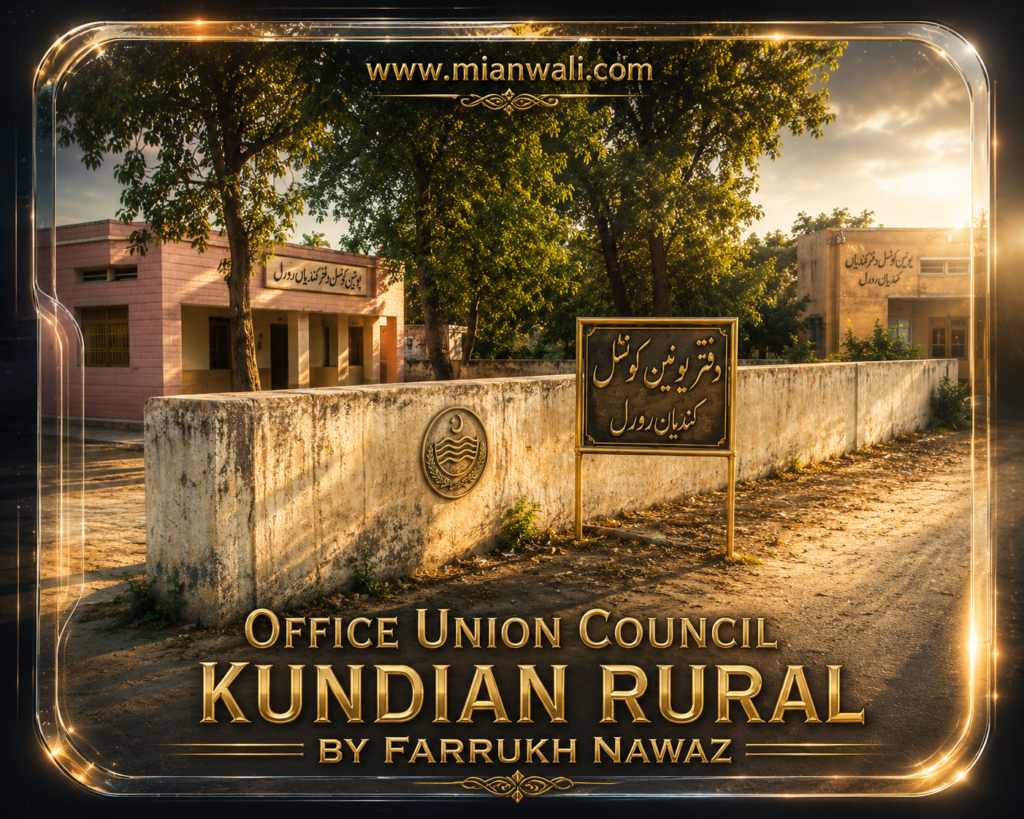
The Name “Kundian”According to local tradition and historical accounts, Kundian derives its name The Kundi are generally regarded as a Pashtun (Pathan) tribe. Historical Although different historical traditions exist regarding their exact ancestry, |
|
Malik Azeem Kundi
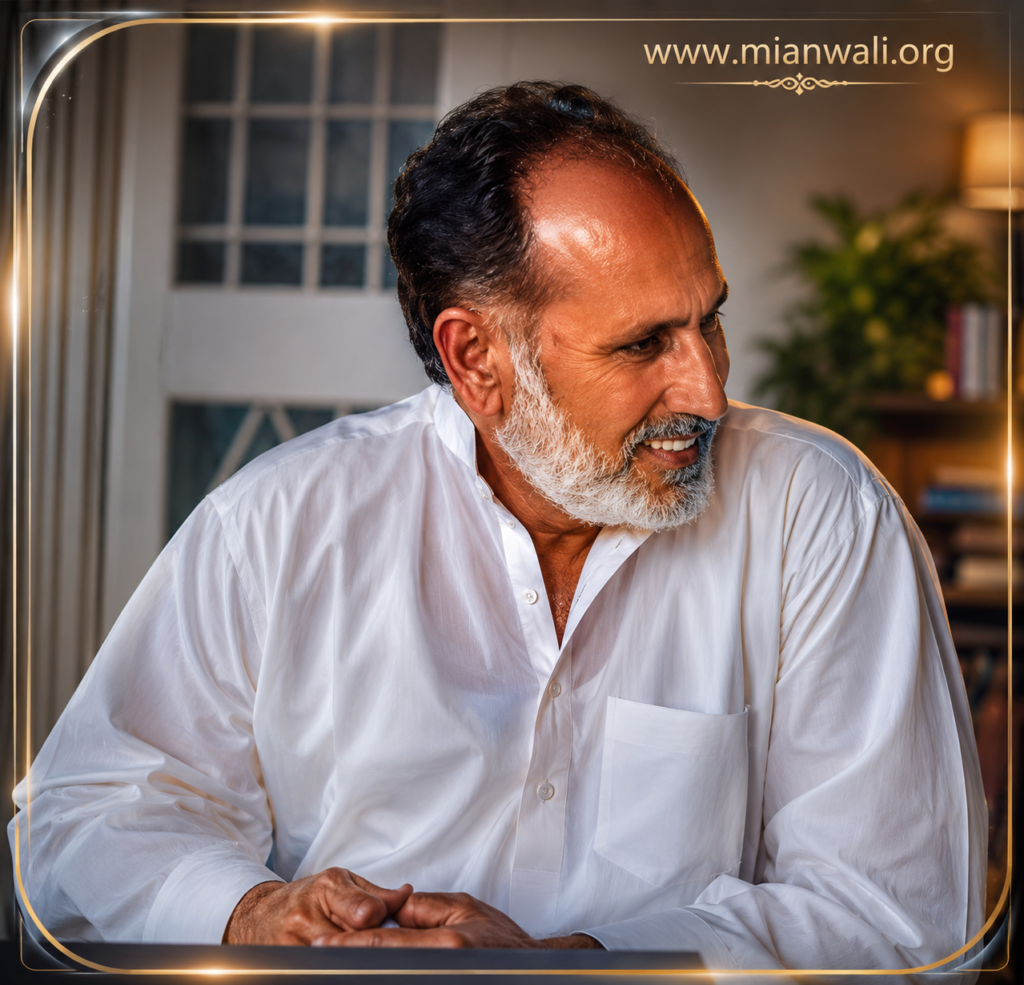 |
Malik Azeem Kundi is remembered as one of the notable personalities associated with the Kundi tribe. His name represents the historical leadership and social standing enjoyed by prominent tribal families within the Kundian region.The development of Kundian owes much to the cooperation of its local tribes, whose influence extended across agriculture, trade, administration, and community affairs throughout the nineteenth and twentieth centuries. |
Communities of Kundian
While the Kundi tribe gave the town its name, Kundian has long been home to a
diverse population representing many ethnic and tribal communities. Their
collective contributions helped transform the settlement into one of the most
important towns of Mianwali District.
| Main Communities | Historical Presence |
|---|---|
| Niazi Pathans | Traditional landowners and agricultural communities. |
| Kundi | Associated with the origin and name of Kundian. |
| Wattoo | Established agricultural families. |
| Awan | Historic settlements throughout the district. |
| Sumbal Pathans | Long-established regional community. |
| Rajputs | Present across neighbouring villages and urban areas. |
| Other Communities | Kalyar, Siyal, Joiya, Laira, Ridhani, Bhariyon, Darhal and Ghanjera families. |
Education and Social Development
Kundian has traditionally enjoyed one of the higher literacy rates within
Mianwali District. Educational institutions, railway employment, government
services, and industrial development have all contributed to the town’s
continued social progress.
Its diverse population, strategic location, and expanding educational
opportunities continue to strengthen Kundian’s role as one of the district’s
most important urban centres.
Pakistan Railways • Kundian Junction
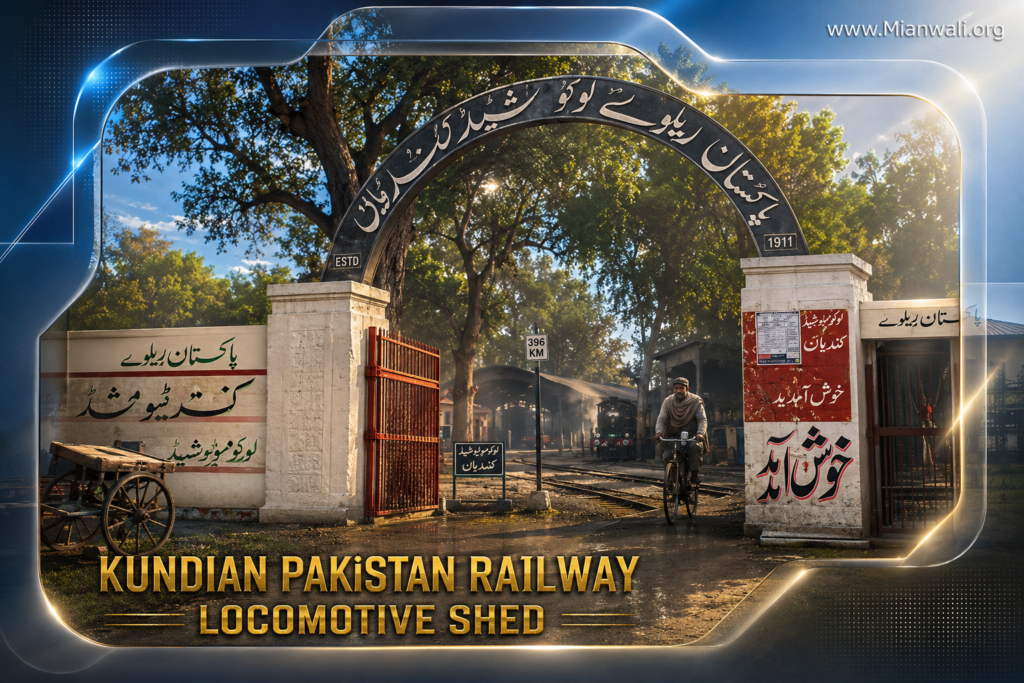
For more than a century, Kundian has served as one of Pakistan’s most important railway centres, connecting Punjab with Khyber Pakhtunkhwa and southern Pakistan.
History of Kundian Railway Junction
The development of Kundian accelerated with the arrival of the North Western Railway during the British colonial period. Its strategic position near the River Indus made the town an ideal railway junction for transporting agricultural produce, minerals, military supplies, and passengers between northern and southern regions of the country.
Over the decades, the railway transformed Kundian from a small settlement into one of the principal transportation hubs of western Punjab. The railway station became the centre around which markets, workshops, residential colonies, and government institutions gradually developed.
One of Pakistan’s Historic Locomotive Sheds
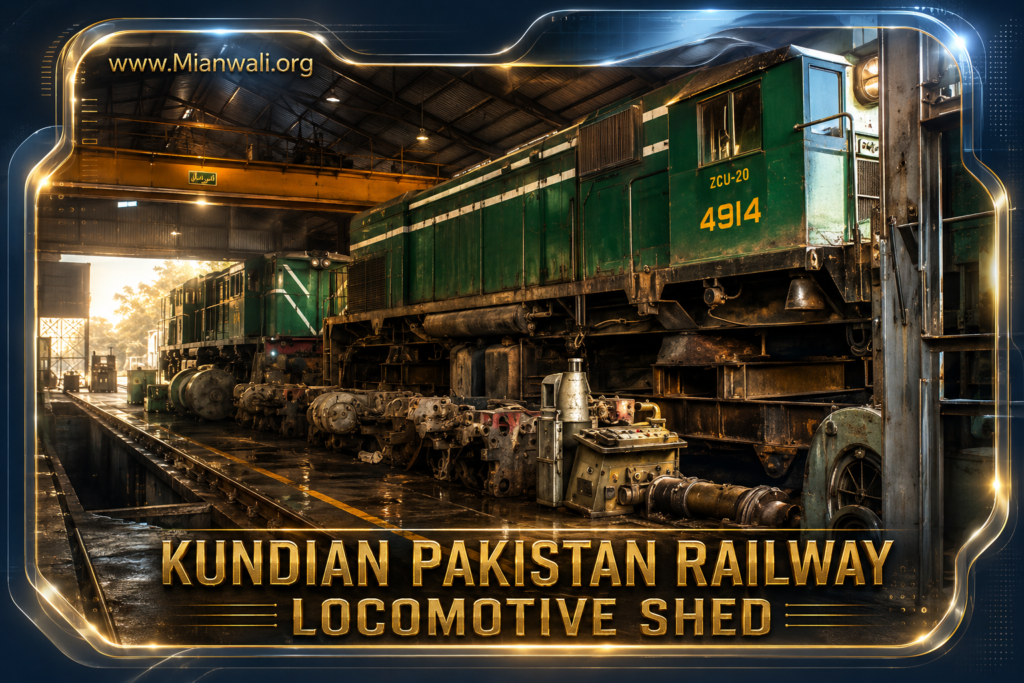 |
One of Kundian’s most remarkable landmarks is its historic locomotive shed, regarded as one of Pakistan Railways’ important maintenance facilities. For decades, locomotives operating throughout western Pakistan were serviced, repaired, and prepared for long-distance journeys at this workshop.
The locomotive shed contributed significantly to the local economy by creating skilled employment for engineers, mechanics, technicians, fitters, welders, and railway staff. It also played a major role in the growth of Kundian’s railway colony. The facility remains an important symbol of Pakistan’s railway heritage and the engineering achievements of the early railway era. |
Historic Railway Heritage
Kundian JunctionA major railway station connecting passenger and freight traffic throughout western Pakistan. |
Locomotive ShedHistoric maintenance facility where locomotives were inspected, repaired, and prepared for service. |
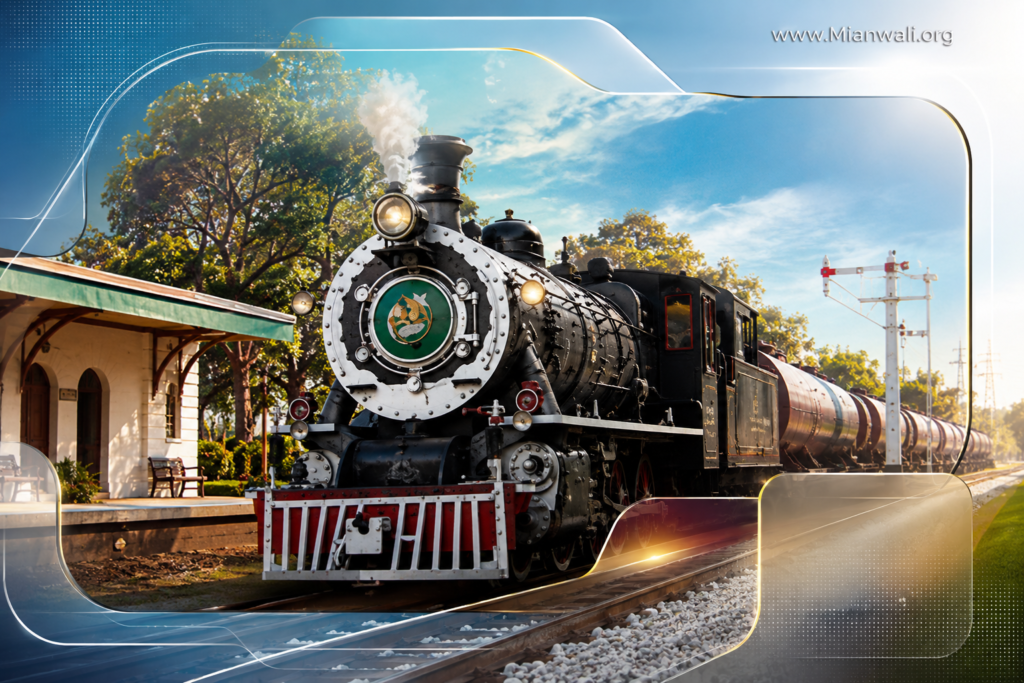
Railway HeritageHistoric trains operating through Kundian became an important part of the cultural memory of the region, including services remembered locally as the “Ghost Train.” |
Railway Connections
| Destination | Importance |
|---|---|
| Mianwali | District headquarters and primary passenger connection. |
| Sargodha | Major commercial and railway link within Punjab. |
| Dera Ismail Khan | Gateway to Khyber Pakhtunkhwa. |
| Multan | Southern railway corridor and commercial centre. |
| Rawalpindi | Northern administrative and transportation connection. |
| Karachi | National freight and long-distance passenger network. |
Economic Importance
The railway continues to support regional commerce by transporting agricultural products, industrial equipment, petroleum supplies, construction materials, and passengers. Kundian’s position on Pakistan Railways has made it one of the district’s most valuable transportation assets for more than a century.
Historical LegacyKundian Junction represents more than a railway station—it symbolizes the town’s transformation into a strategic transportation centre whose influence shaped the economic, industrial, and social development of Mianwali District. The historic locomotive shed remains one of the defining landmarks of Kundian’s railway heritage. |
Mela Singh Khokhar — Builder of the First Gurdwara
Mela Singh Khokhar — Builder of Kundian’s First Gurdwara
A respected railway employee, community leader, and philanthropist whose vision helped establish one of Kundian’s earliest Sikh places of worship during the British era.
Early Service in KundianIn 1904, Mela Singh Khokhar joined the Pakistan Railways’ predecessor during the British administration and was posted to Kundian. At that time, the railway settlement was rapidly expanding as employees from different religious and cultural backgrounds settled in the area. Recognising the spiritual needs of the growing Sikh community, Mela Singh Khokhar took the initiative to establish a permanent place of worship. His leadership earned him the confidence of local residents, who unanimously selected him to oversee the project. Construction of the First GurdwaraThe first Gurdwara began as a modest mud structure serving Sikh railway employees and their families. Through determined fundraising, voluntary labour, and the cooperation of colleagues from various railway departments, the temporary building was gradually replaced with a substantial brick structure. Upon completion of the project, Mela Singh Khokhar voluntarily stepped aside from leadership, believing that public service should be guided by humility rather than personal recognition. |
|
Service Beyond the Gurdwara
Mela Singh Khokhar’s contribution extended beyond the construction of the Gurdwara. Throughout his railway career he actively supported fellow employees, encouraged technical education, and promoted merit within the railway workshops.
Historical accounts mention his assistance in helping Dost Mohammad, a skilled fitter, progress from the position of coolie to rivetter. Such efforts reflected his belief that talent and dedication deserved recognition regardless of social background.
Recognition and Appreciation
| Recognition | Description |
|---|---|
| Certificates of Appreciation | Received numerous certificates acknowledging his dedication and community service. |
| Farewell Ceremony | Honoured by railway colleagues upon his transfer from Kundian. |
| Gold Ring | Presented as a token of appreciation for his outstanding service. |
| Commemorative Walking Cane | A cane bearing his name was gifted in recognition of his leadership. |
| Public Procession | Escorted through Kundian by colleagues and local residents during his farewell. |
Historical Significance
The story of Mela Singh Khokhar reflects the multicultural history of Kundian during the railway era. Employees of different faiths and backgrounds worked together to develop the town, contributing to its schools, religious institutions, railway infrastructure, and civic life.
His legacy remains an important chapter in Kundian’s social history, illustrating how dedication, cooperation, and public service helped shape one of Mianwali District’s most significant railway communities.
Maharaja Ranjit Singh’s Campaign (1821)
`
Maharaja Ranjit Singh’s Campaign (1821)
The military campaign against Mankera marked one of the most significant historical events associated with the Kundian region during the early nineteenth century.
The Advance Towards MankeraIn 1821, Maharaja Ranjit Singh personally led a major military expedition against the fortified city of Mankera. After crossing the River Jhelum, his forces advanced through Khushab before reaching the area now known as Kundian. The route through Kundian provided an important approach to the frontier territories lying west of the Indus River. Owing to its strategic position, the area became an assembly point for the Sikh Army before the advance toward Mankera. The campaign represented one of the most important military operations undertaken by the Sikh Empire in north-western Punjab during the nineteenth century. |
|
Military Leadership
The expedition was supported by several distinguished commanders of the Sikh Empire, including the celebrated General Hari Singh Nalwa and Misar Diwan Chand. Their combined forces assembled before launching the decisive assault against Mankera.
Following the capture of Mankera, Sikh authority expanded throughout the surrounding region. The campaign also facilitated further military operations toward Bhakkar and Dera Ismail Khan, strengthening the Sikh Empire’s influence west of the Indus.
| Commander | Role During the Campaign |
|---|---|
| Maharaja Ranjit Singh | Supreme commander of the expedition. |
| Hari Singh Nalwa | Led major military operations during the advance. |
| Misar Diwan Chand | Senior commander supporting the campaign. |
Historical Impact
The successful capture of Mankera significantly strengthened the Sikh Empire’s position in western Punjab. Contemporary records indicate that territories incorporated after the campaign generated annual revenues exceeding ten lakh rupees, reflecting the economic importance of the newly acquired lands.
For Kundian, the campaign highlights the area’s long-standing strategic significance as a gateway between the Punjab plains and the frontier regions beyond the Indus River. Long before the arrival of the railway and modern energy infrastructure, Kundian occupied an important position along military and trade routes.
Historical SignificanceThe 1821 campaign illustrates Kundian’s strategic geographical importance. Its location near the River Indus made it a natural staging point for armies, traders, and travellers for centuries, a role that later evolved into railway, irrigation, and energy infrastructure serving modern Pakistan. |
Places to Visit in Kundian
Places to Visit in Kundian
Situated along the mighty Indus River, Kundian offers a blend of natural beauty,
historic landmarks, and recreational destinations. From wetlands and reservoirs
to riverside hotels and scenic viewpoints, the town has become an attractive
destination for visitors exploring Mianwali District.

Green Lagoon HotelLocated near the Indus River, Green Lagoon Hotel is one of Kundian’s best-known |
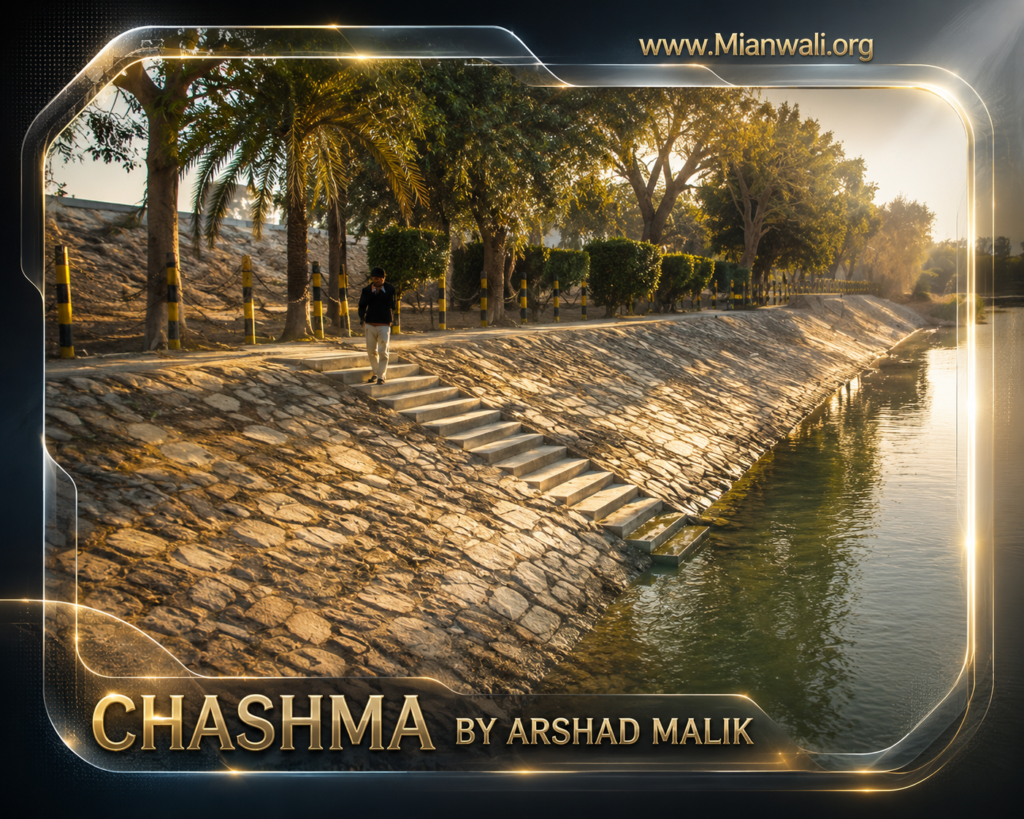
Chashma LakeFormed by the Chashma Barrage, Chashma Lake is renowned for its tranquil waters, |
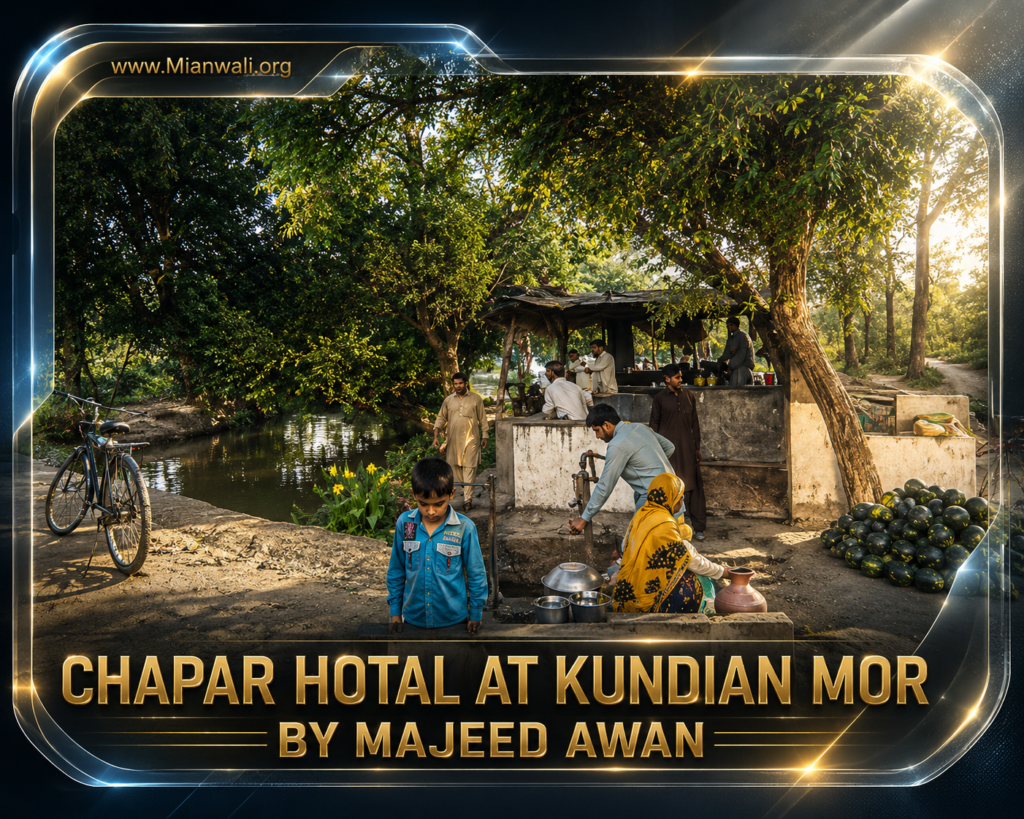
Chapar HotelA popular stop for travellers, Chapar Hotel has served visitors for many years. |
Natural Attractions
| Location | Highlights |
|---|---|
| River Indus | Scenic river views, fishing, agriculture, and cultural heritage. |
| Chashma Lake | Migratory birds, wetlands, boating views, and photography. |
| Chashma Barrage | Engineering landmark, reservoir, and irrigation system. |
| Green Lagoon | Family recreation and riverside dining. |
| Rural Countryside | Traditional villages, fertile farmland, and Indus landscapes. |
Tourism and Recreation
Kundian has become an increasingly popular destination for families,
photographers, birdwatchers, and travellers interested in the natural
environment of the Indus River. During winter, migratory birds from Central Asia
arrive at the wetlands surrounding Chashma Lake, attracting wildlife enthusiasts
from across Pakistan.
Visitors also enjoy exploring nearby villages, observing agricultural life,
sampling local cuisine, and experiencing the peaceful atmosphere that
distinguishes the riverine landscape of Mianwali District.
Visitor InformationThe most favourable time to visit Kundian is between October and March, when |
Educational Institutions & Banking Services
Educational Institutions & Banking Services
Kundian has developed into an important educational and commercial centre within
Mianwali District. The town provides access to schools, colleges, financial
institutions, and transport facilities that serve both urban and rural
communities.
Educational Institutions
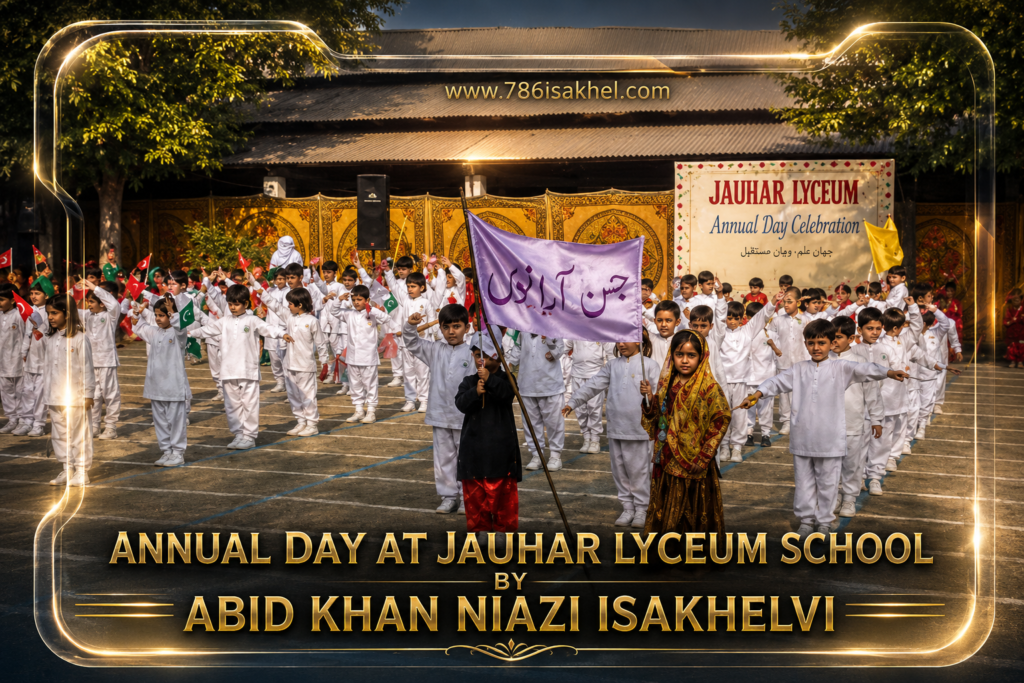
Education has played a significant role in Kundian’s social development for many
|
Banking ServicesKundian hosts branches of several national banks that support personal banking,
TransportationKundian enjoys excellent transport connectivity through both road and rail. Its
|
Community Development
The combination of quality educational institutions, accessible banking
services, and efficient transportation has strengthened Kundian’s position as
one of the leading urban centres of Mianwali District. These facilities support
students, businesses, industries, farmers, and residents from surrounding
villages, contributing to the town’s continued economic and social development.
Modern KundianToday, Kundian continues to evolve as a centre for education, commerce, |
Chashma Barrage & Hydel Power Station
Chashma Barrage & Hydel Power Station
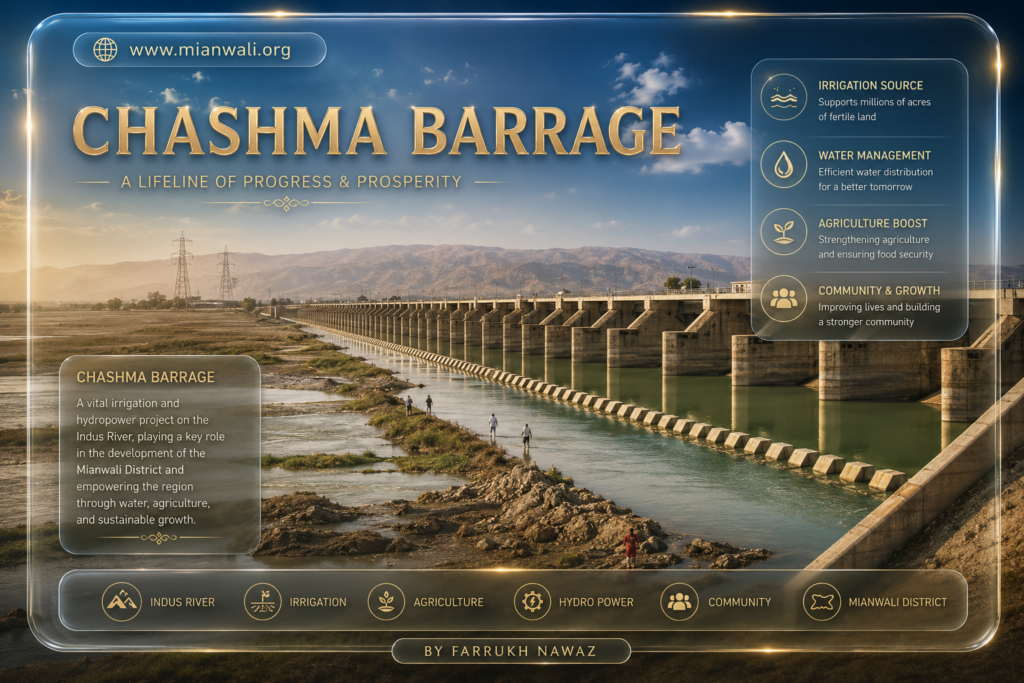
Constructed across the River Indus, the Chashma Barrage is one of Pakistan’s
most significant hydraulic engineering projects. It supports irrigation,
electricity generation, fisheries, flood management, and wildlife conservation.
Chashma Barrage
Completed in 1971, the Chashma Barrage was constructed on the The reservoir consists of shallow water bodies supporting irrigation,
|
Chashma Hydel Power Station
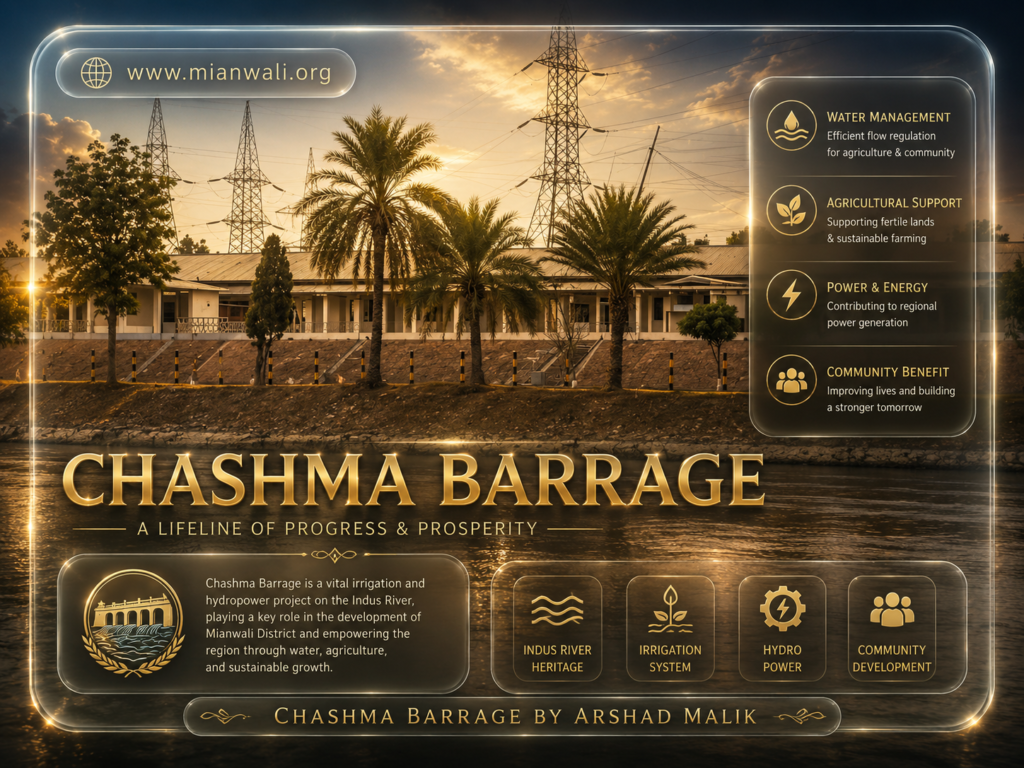
Located adjacent to the barrage, the Chashma Hydel Power Station generates Electricity production varies according to seasonal river flows and irrigation
|
Importance of the Project
IrrigationProvides reliable irrigation water to thousands of hectares of agricultural land |
ElectricityGenerates renewable hydroelectric power that contributes to Pakistan’s national |
Flood ControlRegulates seasonal water flow, reducing flood risks for downstream communities. |
EnvironmentSupports internationally recognised wetlands, fisheries, and wildlife habitats. |
Engineering LandmarkThe Chashma Barrage and Hydel Power Station represent one of Pakistan’s most |
Climate, Wildlife & Economic Importance
`
Climate, Wildlife & Economic Importance
The Chashma wetlands and the surrounding Indus River ecosystem have made
Kundian one of Pakistan’s most ecologically significant regions, supporting
agriculture, fisheries, migratory birds, and sustainable economic development.
ClimateKundian experiences a hot semi-arid climate characterised by
|
Wildlife & WetlandsThe Chashma Reservoir is internationally recognised as one of Pakistan’s most Commonly recorded species include:
Winter bird populations regularly exceed 50,000 waterfowl, |
Economic ImportanceThe River Indus and Chashma Barrage provide the foundation for Kundian’s
|
Natural Resources
Water ResourcesThe Indus River supplies irrigation canals, drinking water, hydropower, and |
FisheriesFreshwater fisheries support local employment and contribute significantly to |
Wetland EcologyAquatic vegetation provides habitat for birds, fish, amphibians, and numerous |
ResearchThe Chashma wetlands provide valuable opportunities for environmental research, |
Environmental SignificanceThe Chashma wetland system is recognised as one of Pakistan’s most valuable |
Chashma Nuclear Power Complex (KNC)
Chashma Nuclear Power Complex (KNC)
The Chashma Nuclear Power Complex is one of Pakistan’s most significant energy
projects, supplying reliable, low-carbon electricity to the national grid while
strengthening the country’s long-term energy security.
Pakistan’s Nuclear Energy HubLocated near Kundian on the eastern bank of the River Indus, the The first reactors at Chashma marked an important milestone in the country’s Together with the nearby Chashma Hydel Power Station, the complex has transformed |

Entrance to the Chashma Nuclear Power Complex. |
Nuclear Power Generating Units
| Generating Unit | Status | Purpose |
|---|---|---|
| Chashma Nuclear Power Plant Unit-1 (C-1) | Operational | Commercial electricity generation. |
| Chashma Nuclear Power Plant Unit-2 (C-2) | Operational | Commercial electricity generation. |
| Chashma Nuclear Power Plant Unit-3 (C-3) | Operational | Expansion of generating capacity. |
| Chashma Nuclear Power Plant Unit-4 (C-4) | Operational | Support for Pakistan’s national grid. |
Importance to Pakistan
Clean EnergyProduces large quantities of electricity without carbon emissions associated |
Energy SecurityProvides dependable base-load electricity throughout the year, reducing pressure |
TechnologyRepresents one of Pakistan’s most advanced engineering and scientific |
EmploymentSupports engineers, scientists, technicians, security personnel, and numerous |
Contribution to Kundian
The establishment of the Chashma Nuclear Power Complex has significantly
influenced Kundian’s development by improving infrastructure, expanding housing,
creating skilled employment opportunities, and supporting educational and
technical institutions throughout the region.
Combined with the railway junction, Chashma Barrage, and Hydel Power Station,
the nuclear complex has positioned Kundian among Pakistan’s most strategically
important industrial centres.
Energy Capital of MianwaliThe combined presence of nuclear power generation, hydroelectric production, |
Continue Exploring Mianwali
Discover more about the rich history, culture, genealogy, geography, and
heritage of Mianwali District through our growing collection of articles and
archives.
© Mianwali.org — Preserving the History, Heritage & Culture of Mianwali District.
“`
“`


A lot of info is supplied on this page ..about ours Kundian but the origin or early life of kundian is however not mentioned …..well done however………appreciated page …
A lot of info is supplied on this page ..about ours Kundian but the origin or early life of kundian is however not mentioned …..well done however………appreciated page …
Nice and detailed introduction of Kundian but required detail introduction of kundi family and their contributions for the land of chashma, Please mention them in detail…………..
Nice and detailed introduction of Kundian but required detail introduction of kundi family and their contributions for the land of chashma, Please mention them in detail…………..
Kundian is a very nice city of Mianwali
Kundian is a very nice city of Mianwali
nice and good struggle about historicle places……greeting and cheer from majeed awan (fatehpur layyah)
nice and good struggle about historicle places……greeting and cheer from majeed awan (fatehpur layyah)
I heard the story about the ghost in mianwali about 18 to 22 feet long ghost looks like a human is located and very powerfull i watn to know is this true thing……. kindly someone tell me about that
I heard the story about the ghost in mianwali about 18 to 22 feet long ghost looks like a human is located and very powerfull i watn to know is this true thing……. kindly someone tell me about that
this is a beautifull information page,but few requirements is not given, like kundi femlies detail,cost and sub cost for the all living people,we are waiting,plz you publish its detail again.
this is a beautifull information page,but few requirements is not given, like kundi femlies detail,cost and sub cost for the all living people,we are waiting,plz you publish its detail again.
Much Improvements is Needed , But Good Work .
Much Improvements is Needed , But Good Work .
I passed matric from Govt. High School Kundian in 1976 (now it is higher sec school)when Khuda Bakhsh Malik was headmaster. We lived in railway colony then. My father was railway employee. He was transferred from Kundian to Kohat in 1976. The pictures of railway station, loco shed and chashma barrage reminded me the old good days and chilhood memories.
I passed matric from Govt. High School Kundian in 1976 (now it is higher sec school)when Khuda Bakhsh Malik was headmaster. We lived in railway colony then. My father was railway employee. He was transferred from Kundian to Kohat in 1976. The pictures of railway station, loco shed and chashma barrage reminded me the old good days and chilhood memories.
It’s a commendable job, I appreciate the efforts. It’s great tribute to one’s own region, a nice effort to preserve the history, culture and traditions of our Mianwali. Initially, it seems to be a thirsty work but with the passage of time and contribution of all the Mianwalians it would become an authentic source of information about Mianwali.So,I would request all the Mianwalians to put their share to make this website more detailed one. Once again salute to the person who thought of initiating such work.
It’s a commendable job, I appreciate the efforts. It’s great tribute to one’s own region, a nice effort to preserve the history, culture and traditions of our Mianwali. Initially, it seems to be a thirsty work but with the passage of time and contribution of all the Mianwalians it would become an authentic source of information about Mianwali.So,I would request all the Mianwalians to put their share to make this website more detailed one. Once again salute to the person who thought of initiating such work.