
Professor Munawar Ali Malik (b. 1930) is a prominent Pakistani scholar, educator, poet and author who significantly influenced English-literature education and multilingual literary culture in Punjab. A native of Daudkhel, Mianwali District, Malik earned a reputation as a dedicated teacher and writer. He retired as an Associate Professor of English at Government College Mianwali after decades of service in higher education.
In addition to teaching, Malik authored books and numerous articles in Urdu, English, Persian and Saraiki. His literary connection with the legendary folk singer Attaullah Khan Esakhelvi brought some of his poetry into popular musical culture.
At a Glance
1930
Educator
G.C. Mianwali
Multilingual
Early Life and Education
Munawar Ali Malik was born in Daudkhel, a small town in the Isa Khel region of Mianwali District, then part of British India. His exact birth date is sometimes listed as 12 February 1930, while some records indicate 1931. Available biographical evidence suggests that family diaries and later reminiscences constitute important sources for reconstructing his early life.
Malik’s family belonged to the Arab-origin Awan community associated with Mianwali. His great-great-ancestor Qutb Shah is associated with the Qutabshahi Awan lineage. His father, Malik Muhammad Akbar Ali, was a highly educated man who obtained a B.A. in Mathematics and Philosophy from Government College Lahore. He became a teacher, later Inspector of Schools, and ultimately Headmaster of Government High School Daudkhel.
Malik grew up within this strongly educational environment. His childhood was spent in Isa Khel, where his father taught. His elder brother, Malik Muhammad Anwar Ali, also became an educator and reportedly served as Headmaster of Daudkhel school for approximately three decades.
His early education was closely connected with the same educational world. He was remembered as a quiet and studious child with a strong interest in reading. This early intellectual environment helped establish the multilingual and literary orientation that later became a defining feature of his career.
After secondary schooling, Malik pursued higher education. Sources indicate study at Gordon College, Rawalpindi, followed by a B.A. in English and teacher training at Central Training College Lahore. He subsequently obtained an M.A. in English from the University of the Punjab, Lahore, reportedly through private study.
Academic and Professional Career
Early Teaching Appointments
After completing his teacher training, Malik returned to Mianwali and began his teaching career. He worked as an English teacher at Government High School Daudkhel, the same institution associated with his father and brother.
According to his own reminiscences, he taught English to Classes Six and Eight and remained at Daudkhel for approximately four years. The experience strengthened his commitment to education and gave him his first sustained experience as a professional teacher.
In January 1958 he obtained a teaching position at Government High School Makerwal. He later became Headmaster of Government Middle School Thathi following its upgrading. This represented a rapid progression from classroom teacher to school leadership.
College Lectureship and Professorship
After obtaining his M.A. in English, Malik entered higher education and joined Government College Mianwali as a Lecturer of English. Over the course of his career he progressed to senior faculty and ultimately became Associate Professor and a leading figure in the college’s English Department.
His teaching included postgraduate M.A. English classes. He strongly promoted English-language immersion and expected students to use English in the classroom rather than relying on Urdu translation.
“When I was teaching MA classes in Government College, Mianwali, I never spoke a single Urdu sentence in the classroom.”
His long association with Government College Mianwali made him an important figure in the development of English-literature education in the district. Following the retirement of Munawar Ali Malik and colleague Professor Sarwar Khan Niazi, the college’s M.A. English programme was reportedly suspended because of inadequate faculty.
Career Timeline
c. 1954–1958
English Teacher — Government High School Daudkhel
January–April 1958
English Teacher — Government High School Makerwal
1958 onward
Headmaster — Government Middle School Thathi
Later Career
Lecturer → Associate Professor of English — Government College Mianwali
c. 2006
Retirement from Government College Mianwali
Research Contributions and Publications
Malik’s literary output encompasses creative writing, memoir, literary criticism, interviews, educational writing and poetry. His work crosses Urdu, English, Saraiki and other linguistic traditions.
Dard Ka Safeer
An autobiographical work associated with Malik’s friendship with singer Attaullah Khan Esakhelvi and the cultural world of Mianwali.
Pas-e-Tehreer
A collection of written interviews with important Urdu writers including Mumtaz Mufti, Mirza Adeeb, Shafiq ur Rahman, Ahmad Nadeem Qasmi and others.
John Milton
An Urdu-language study of the seventeenth-century English poet John Milton, connecting Western literary scholarship with Urdu readership.
Jo Tum Se Keh Na Saka
An Urdu poetry collection containing ghazals and nazms reflecting personal, emotional and literary themes.
Pedagogical Philosophy
Malik’s teaching philosophy emphasized active use of language rather than rote memorization. He believed that students developed fluency through sustained listening, speaking, reading and practical engagement.
01 — English Immersion
He insisted that English classes should be conducted in English and encouraged students to ask questions in the target language.
02 — Practice Before Rote
He emphasized listening and speaking practice and rejected the idea that grammar rules alone could produce genuine language fluency.
“Grammar cannot teach you language.”
Civic and Cultural Engagement
Beyond formal education, Malik participated actively in the literary and cultural life of Mianwali and Punjab. His poetry entered popular culture through the recordings of Attaullah Khan Esakhelvi, whose repertoire included lyrics by poets from Mianwali.
Malik was also associated with local literary circles and the Mianwalian Writers Club. His writings about Mianwali’s history, food, traditions and social life helped document regional culture for later generations.
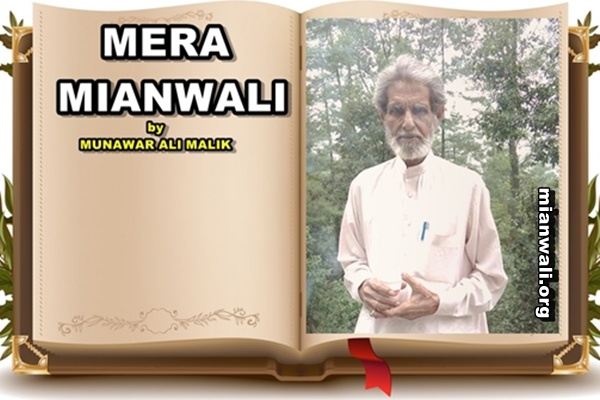
“Mera Mianwali”
Through his writings on Mianwali, Malik became an important chronicler of local memory, traditions and cultural identity.
Recognition and Legacy
Munawar Ali Malik’s legacy rests on several interconnected achievements: decades of teaching, literary production in multiple languages, contributions to English education, engagement with regional culture and the influence he exercised over generations of students.
His reputation is particularly strong in Mianwali, where he is remembered as a professor, scholar, poet and literary figure. His books, columns, educational writings and cultural essays have preserved aspects of the intellectual history of the region.
His association with Attaullah Khan Esakhelvi also illustrates the unusual intersection between formal literature and popular folk music. Through this connection, poetry originating in the literary culture of Mianwali reached audiences far beyond the classroom.
Historical Significance
Tradition and Modernity
Malik’s life represents an interaction between regional cultural traditions and modern academic education. Rooted in the cultural environment of Mianwali, he simultaneously engaged with Western literary traditions and English-language scholarship.
Education in Rural Punjab
His professional trajectory reflects the expansion of higher education in Pakistan during the second half of the twentieth century. His movement from village school teaching to college-level English education illustrates the increasing importance of formal education in rural Punjab.
Regional Literary Identity
Through poetry, memoir, literary criticism and writings on Mianwali, Malik contributed to the preservation of regional intellectual identity. His work demonstrates how local writers can document a community’s cultural memory while simultaneously participating in wider literary traditions.
Research Note
Some biographical details concerning Professor Munawar Ali Malik remain dependent on memoirs, family recollections, local documentation and secondary sources. Dates relating to early education and individual appointments should therefore be treated cautiously where institutional records are unavailable. Further research should consult college archives, government education records, personal papers, published books and oral histories of former students and colleagues.
A Living Archive of Mianwali
Professor Munawar Ali Malik occupies a distinctive place in the intellectual and literary history of Mianwali. His life combined teaching, literary scholarship, poetry, cultural documentation and a sustained interest in the people, places, memories and traditions of his native region.
Original Archive Collection
Biography & Works
The principal biographical record documenting Professor Munawar Ali Malik’s life, education, teaching career and literary work.
Mera Mianwali
Professor Malik’s writings on Mianwali, its people, history, customs, food, landscape and cultural memory.
Ilmi o Adbi Khidmaat
A dedicated record of his scholarly, literary, educational and cultural contributions.
Selected Literary Record
Autobiographical and literary work associated with Professor Malik’s recollections and his relationship with Attaullah Khan Esakhelvi.
A collection of literary interviews and conversations with prominent Urdu writers.
An Urdu-language study of the English poet John Milton and his literary significance.
A collection of Urdu poetry containing ghazals and nazms.
Mera Mianwali
The Mera Mianwali writings form an important part of the documentary archive of local memory. Through observations of people, places, traditions, food, language and history, Professor Malik recorded aspects of Mianwali’s cultural life for future generations.
Ilmi o Adbi Khidmaat
The scholarly record examines Professor Munawar Ali Malik’s intellectual and literary services, providing a deeper academic perspective on his contribution to education and literature.
Selected References
Associated Press of Pakistan. (2023, August 19).
Popular folk singer Attaullah Esakhelvi turns 72.
APP.
Dawn News. (2006, September 6).
MA English classes suspended.
Dawn.
Malik, M. A. (2017).
My feelings, my emotions, my thoughts and my words.
Mianwali.org.
Malik, M. A. (2018).
My feelings, my emotions, my thoughts and my words.
Mianwali.org.
Mianwali.org.
Munawar Ali Malik.
Mianwali.org.
Niazi, N. (2014).
Munawar Ali Malik ki ilmi o adbi khidmaat.
M.Phil. thesis, Allama Iqbal Open University.
Mianwali.org.
Urdu Wikibooks.
منور علی ملک.
Wikibooks.
Related Mianwali.org Material

GULISTAN KHAN NIAZI -PERSIAN SINGER FROM MIANWALI AND A SHINING NAME OF RADIO PAKISTAN
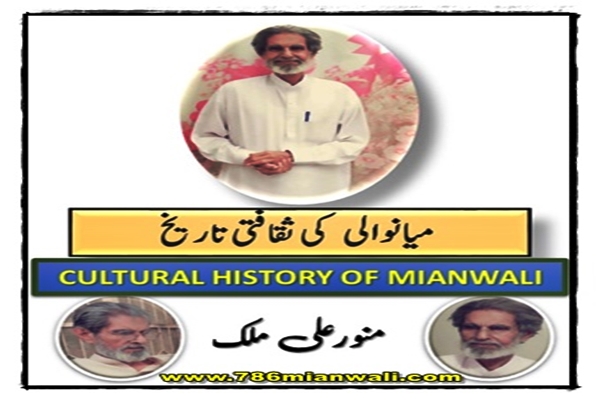
The Cultural History of Mianwali: Traditions, Heritage, and Local Legacy
MY FEELINGS,MY EMOTIONS ,MY THOUGHTS AND MY WORDS -FEB17
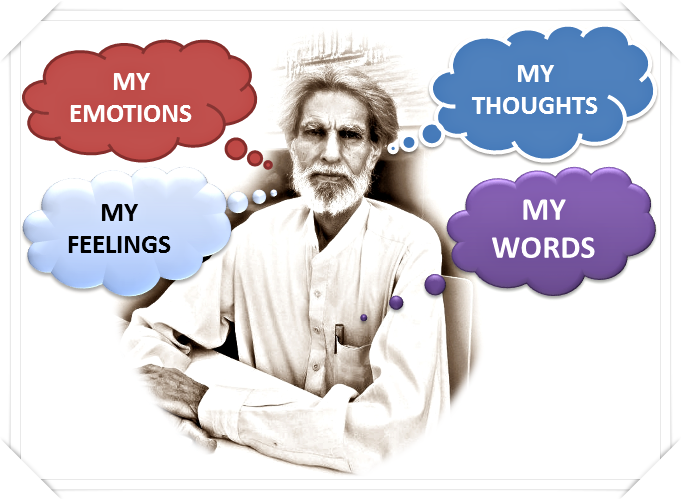
My Feelings, My Emotions, My Thoughts and My Words – Prof. Munawar Ali Malik


Professor Munawar Ali Malik: Life and Contributions

Munawar Ali Malik ki Ilmi o adbi khidmaat


I don’t know how to thank you enough for the great job have done. Words have always been my forte, but today I really feel at a loss for suitable words to express my gratitude. I can only pray for you, Niazi Sahib. Once again I fervently pray to ALLAH to Bless you INFINITELY.
Ever gratefully yours,
Munawar Ali Malik
I don’t know how to thank you enough for the great job have done. Words have always been my forte, but today I really feel at a loss for suitable words to express my gratitude. I can only pray for you, Niazi Sahib. Once again I fervently pray to ALLAH to Bless you INFINITELY.
Ever gratefully yours,
Munawar Ali Malik